

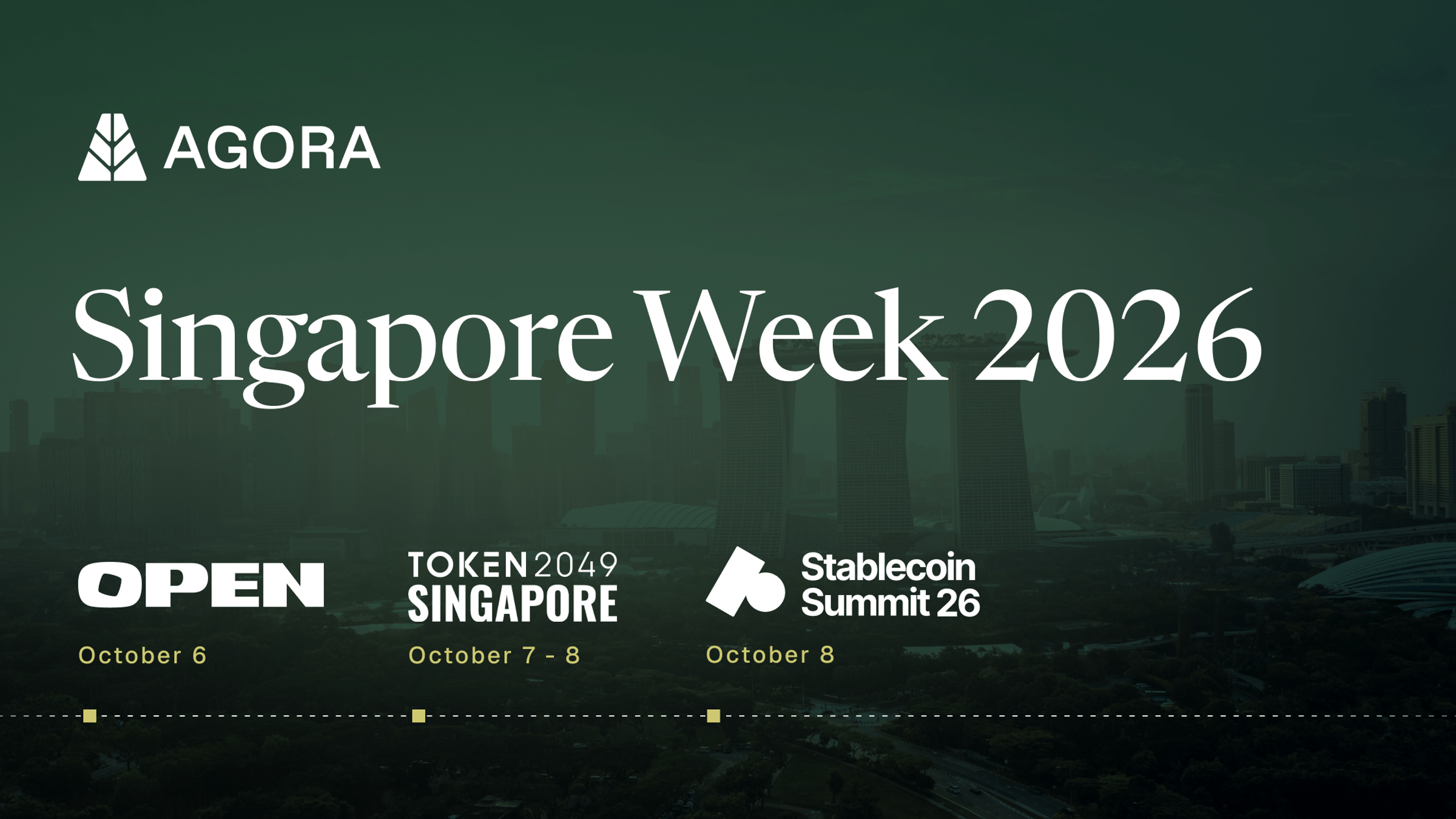
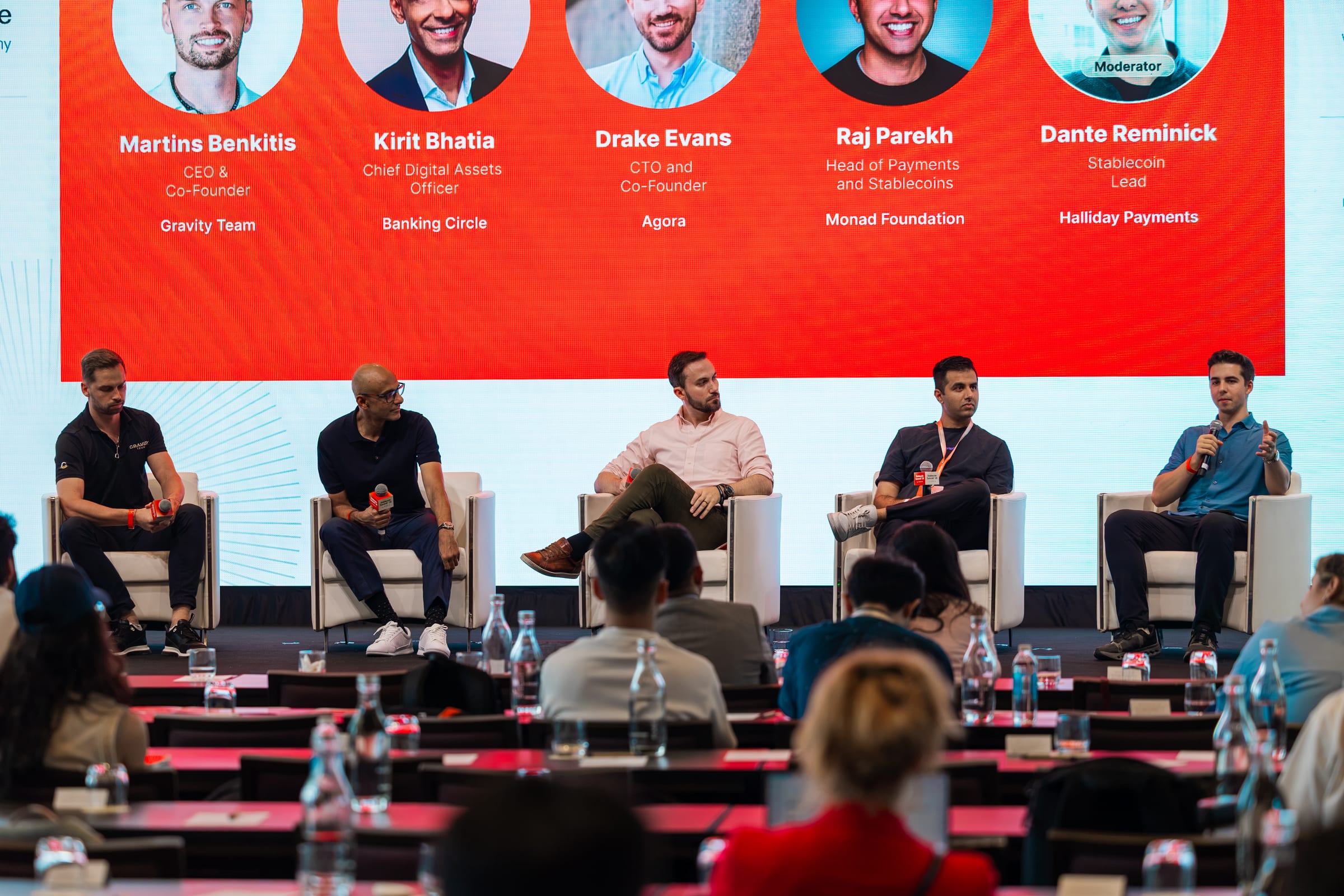
Every October, the digital asset industry descends on Singapore with a focus on exploring the future of the industry, attending events and learning more about what’s fueling the APAC market. Drake Evans, our CTO, delivered the keynote at Monad's inaugural OPEN and joined panels at Stablecoin Summit and TOKEN2049.
The conversations had a different tone than in years past. Fewer people asked whether stablecoins matter and were more focused on how to put them to work. Here is what we heard, and what we think it means for the market.
Institutions have moved from curiosity to pilots
The clearest market signal of the week came from who was asking the questions. Funds, family offices, payments companies and traditional financial firms arrived with specific questions and real timelines.
Tokenization drove a majority of the conversations, from tokenized securities to onchain funds. Stablecoins sit underneath all of it and tokenized assets need a dollar to settle against, and institutions want that dollar to meet the same standards as the rest of their balance sheet.
The hard question is what comes after the pilot
Many institutions have now run their first onchain pilot and experienced how to move assets onchain, how the plumbing works, and checked the compliance boxes. Then the assets sat there.
The question that we heard most often in Singapore was a simple one. ‘What comes next?’ A pilot proves something can work but it does not prove it should scale. To justify the next step, onchain capital has to do something useful while it waits, and move wherever the business needs it next.
Stablecoins are becoming working capital
The best conversations of the week skipped feature lists and went straight to use cases. Exchanges asked how to hold balances between trades and move into other stablecoins on demand. Treasury teams focused on how to keep idle balances productive without lending them out. Payments firms asked how to settle across chains without building the infrastructure themselves.
That shift matters and when stablecoins compete on features, buyers default to the largest name. When they compete on what they let a business do, the market opens up.

AI will accelerate all of it
AI came up in almost every conversation, and it was the focus of Drake’s TOKEN2049 panel with Chainalysis and Pantera Capital. His message throughout the week was consistent: AI will accelerate tokenization and stablecoin adoption, not slow it down.
As businesses hand more work to software, from treasury operations to reconciliation and compliance checks, the money that software moves has to work the way software does. It must be programmable, available around the clock, and accessible through an API. Stablecoins already meet that standard. The more work AI agents take on, the more onchain dollars they will need to move.
Where Agora fits
Agora builds stablecoin infrastructure for institutions ready to move past the pilot. AUSD is backed by independently audited reserves and built to the standards institutions already apply to the rest of their balance sheet. Through our APIs, businesses can mint, redeem and move AUSD across chains so their onchain capital goes wherever the business needs it next.
For builders in ecosystems like Monad, AUSD is already part of the stack. For institutions comparing AUSD to the stablecoins they hold today, the difference comes down to alignment. AUSD shares the economics with the partners that distribute it, so the platforms that grow AUSD grow with it.
The window is open
The stablecoin market is no longer waiting for institutions to arrive; they are here and they are deciding which infrastructure to build on. The providers that win this phase will be the ones that help institutions move past the pilot and put onchain capital to work.
We left Singapore convinced the timing is right. Thank you to every partner, builder and team who made time for us. We will see many of you at Money20/20 next week.